
You may go to bed hoping for sleep, only to wake up exhausted, struggle with daytime sleepiness, or hear from your partner that you snore or stop breathing during the night. If you also live with obesity, these problems may be more closely connected than you realize.
At NJ Advanced Surgical Solutions, Dr. Prokurat helps patients throughout Central New Jersey address obesity through bariatric care. Understanding how weight and obstructive sleep apnea interact can help you take a more complete approach to your health.
How obesity can lead to sleep apnea
Obstructive sleep apnea (OSA) occurs when your upper airway repeatedly narrows or closes during sleep, interrupting normal breathing. Obesity is an important risk factor because excess tissue around the neck and upper airway can make the airway more susceptible to collapse. Excess abdominal weight can also affect lung volume and respiratory mechanics.
The relationship can become a cycle. Poor sleep and daytime fatigue may make regular physical activity and other healthy behaviors more difficult, while untreated OSA can contribute to cardiovascular and metabolic health risks. This is why obesity and sleep apnea often need to be considered together rather than as completely separate problems.
How treating obesity can help with sleep apnea
Weight loss does not guarantee that sleep apnea will disappear. Your airway anatomy, age, genetics, muscle tone, hormones, medications, and other factors may also contribute to OSA. However, meaningful weight loss can reduce the severity of sleep apnea for many people and may make the condition easier to manage.
Reducing pressure around your airway
As you lose excess body fat, the amount of tissue surrounding your upper airway may decrease. This can create more room for airflow and reduce the tendency of your airway to collapse while you sleep. For some people, this translates into fewer breathing interruptions and less severe OSA. However, you should continue your prescribed sleep apnea treatment unless your sleep specialist determines that it can safely be changed or discontinued.
Improving breathing mechanics
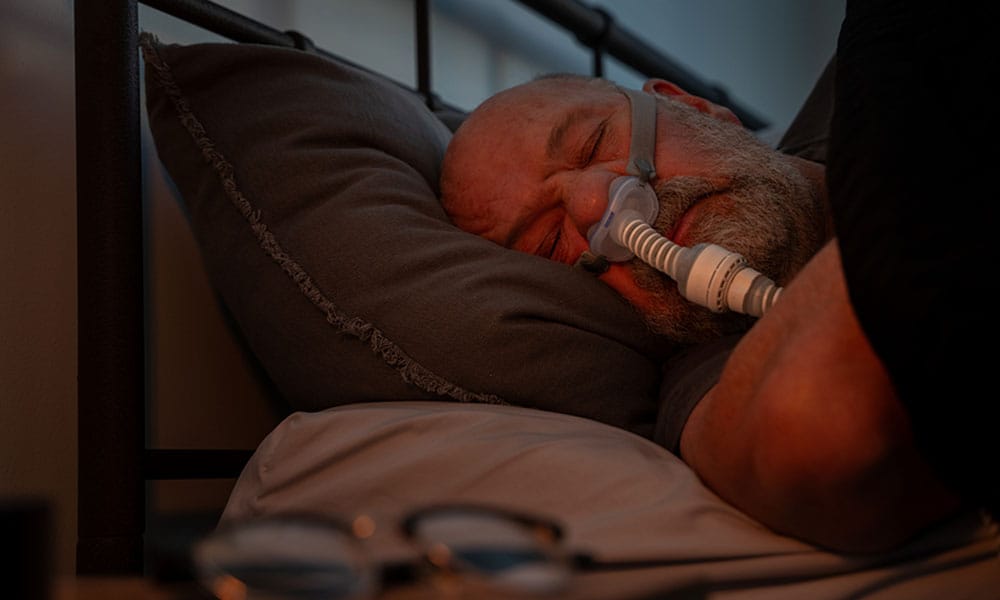
Obesity does not affect only the tissues around your throat. Excess abdominal and chest weight can restrict normal movement of the diaphragm and reduce lung volume. Losing weight may decrease this burden, allowing your respiratory system to function more efficiently. These changes can complement CPAP or AutoPAP rather than necessarily replacing them.
Making sleep apnea treatment easier
Even when OSA remains after substantial weight loss, its severity may decrease. Some patients may require different PAP settings or become candidates for additional treatment approaches. Your sleep apnea should therefore be reassessed after significant weight loss. Feeling more energetic or sleeping better does not necessarily mean that OSA has resolved, and consumer sleep trackers cannot substitute for appropriate diagnostic sleep testing.
Addressing obesity-related health risks
Obesity and OSA can independently increase your risk of conditions like high blood pressure, cardiovascular disease, and type 2 diabetes. Addressing obesity may therefore provide benefits extending beyond nighttime breathing.
For those who qualify, bariatric surgery can be one component of comprehensive obesity treatment. NJ Advanced Surgical Solutions offers options such as gastric sleeve and gastric bypass surgery, along with nutritional counseling, to promote long-term healthy living. Sleep apnea is among the conditions considered during bariatric evaluation.
Take a comprehensive approach to your health
Treating obesity and sleep apnea together means recognizing that improving one condition may positively affect the other while continuing to address each appropriately. If obesity is affecting your sleep and overall health, Dr. Val Prokurat can evaluate whether bariatric surgery may be appropriate for you and discuss your options.
Contact NJ Advanced Surgical Solutions to schedule a consultation at one of our locations serving patients throughout Central New Jersey and the Jersey Shore, including Freehold, Neptune City, Plainsboro, and Robbinsville.